October 7, 2026
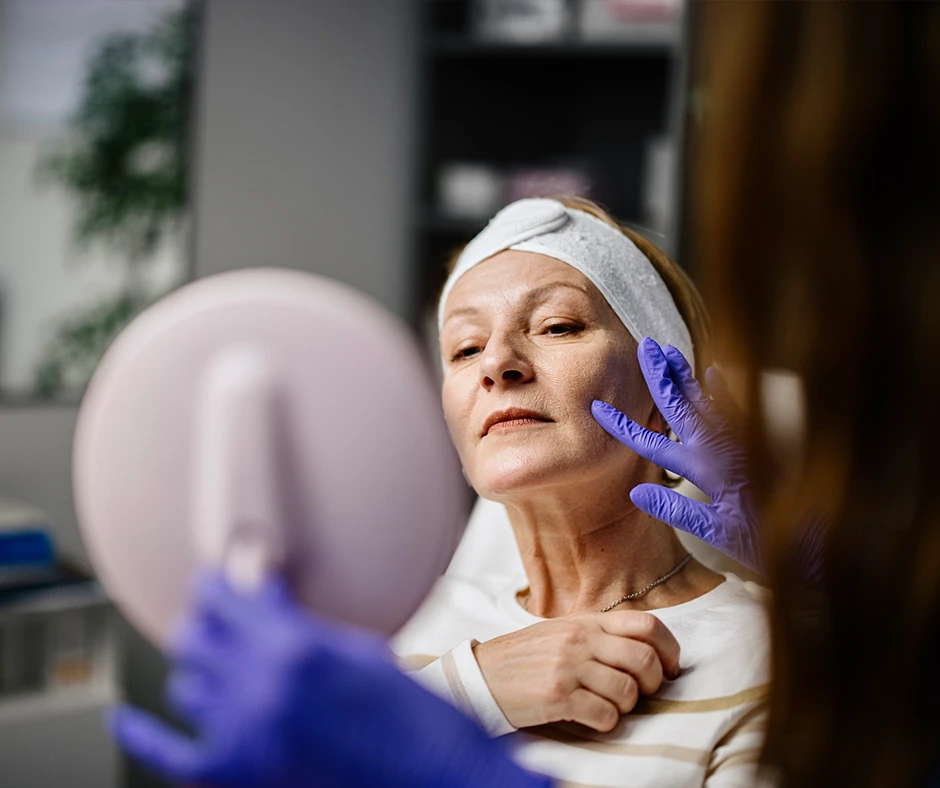
Deciding to undergo a facelift is a significant step, and so is the recovery that follows. Whether you are in Foley, Fairhope, Orange Beach, or anywhere along Alabama's Gulf Coast, the choices you make during healing have a direct impact on how well and how quickly you recover.
This guide focuses on the patient side of facelift recovery: the practical, evidence-based behaviors and habits that support healing. It is not a clinical summary of the procedure itself. This is for patients who have already made their decision and want to know how to recover as well as possible.
The strategies here are drawn from more than 25 years of Dr. Fedok’s surgical practice and his published research on lower face and midface rejuvenation.
Understanding the biology of healing helps patients make better decisions during recovery and understand how to speed up their facelift recovery. After facelift surgery, the body initiates a layered repair process. In the first 72 hours, the priority is inflammation; the area swells as the immune system sends resources to the surgical site. This is not a complication. It is the first stage of healing, and it is necessary.
Between days four and fourteen, new collagen begins to form along incision lines and repositioned tissue planes. This is the stage where external behavior matters most.
From week three onward, the tissue remodeling phase begins. Swelling continues to resolve in gradual stages. Most patients are surprised to learn that up to 30 percent of residual swelling may still be present at the six-week mark, even when they look and feel largely recovered. Final results continue to refine for several months as deeper tissue layers settle and the skin adapts to its repositioned support structure.
Most patients focus on rest and wound care after surgery, but nutrition is equally important and frequently overlooked. The body requires specific building blocks to repair tissue efficiently, and a recovery diet that is low in protein or dehydrated will slow every stage of the healing process.
How you care for your skin during recovery directly affects both the quality of your incision healing and the longevity of your results. Dr. Fedok’s approach to post-surgical skin care is informed by his published work on modern resurfacing and skin treatment protocols, which emphasizes that the skin’s surface condition significantly influences how final surgical results are perceived.
The physical choices you make during recovery have a measurable impact on swelling, bruising, and facelift healing time.
The emotional arc post-facelift recovery follows a predictable pattern that most patients are not warned about. The first week is often the hardest, with swelling is at its peak, visible bruising, and no resemblance to what the outcome will look like. Many patients experience a period of doubt or regret during this phase. This is extremely common and does not predict your result.
The face you see at day ten is not the face you will see at month three. Swelling resolves in layers, and the deeper tissue planes, those most directly repositioned during surgery, take the longest to settle. Give yourself a firm rule: do not evaluate your results for at least six weeks, and do not compare your recovery to images online, which show only selected moments and rarely represent the full healing arc.
It is also worth understanding that recovery timelines are technique-dependent. Dr. Fedok’s research on matching surgical technique to individual facial anatomy and his published work on midface rejuvenation approaches demonstrate that the depth of the surgical plane, the degree of tissue repositioning, and each patient’s baseline anatomy all influence how quickly swelling resolves. Two patients recovering from facelifts with the same surgeon may have noticeably different timelines. Both can be entirely normal and on track.
If you have specific concerns during recovery and want more detail of what to expect after facelift surgery, contact Dr. Fedok’s team directly. Every follow-up appointment is an opportunity to ask questions, and no concern is too small to raise.
The quality of your facelift recovery is inseparable from the quality of your surgeon’s planning. Dr. Fedok’s published work on lower face and central facial rejuvenation and his role as editor of the textbook Minimally Invasive and Office-Based Procedures in Facial Plastic Surgery reflect a career built on understanding how surgical decisions affect both outcomes and recovery. His post-operative protocol, including the sequencing of skin treatments, the timing of follow-up appointments, and the guidance on lifestyle behaviors during healing, is a deliberate part of the treatment plan, not an afterthought.
Patients trust Dr. Fedok to guide them through every stage of their facelift journey, from initial consultation through the final stages of their facelift healing time.
A private consultation with Dr. Fedok is the place to ask every question about your procedure and your recovery, including what your personal healing timeline is likely to look like based on your anatomy and the technique that is right for you.

By Dr. Fedok, a well-respected and his expertise is reflected in his before-and-after gallery, RealSelf reviews, and Google Reviews reflect his trusted expertise.
September 29, 2026
Most people do not wake up one morning and decide it is time for facelift surgery. It is more of a s ...

April 23, 2026
The phrase pre-menopause facelift has become more commonly spoken about in both lifestyle and aesthe ...
